Latest News
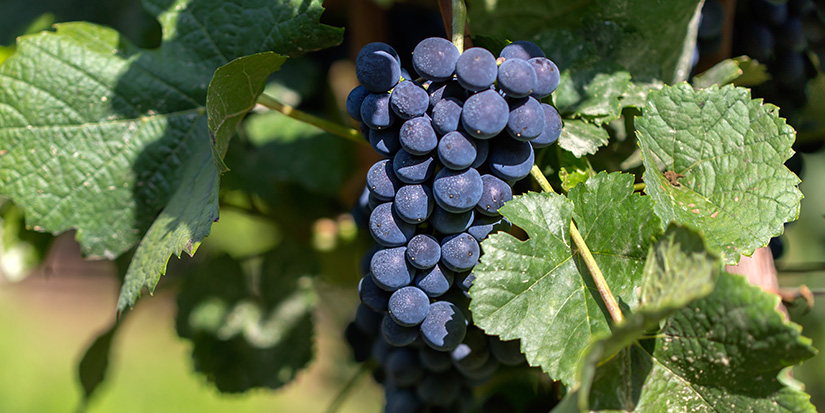
THE CULT WINE MOVEMENT

Published 4:11 PST, Mon December 1, 2025


-
If you look up the word “cult” on Dictionary.com you will find many interesting definitions. For the sake of this piece, we will look at just one: “a group or sect considered to be false, unorthodox, or extremist, with members often living outside of conventional society under the direction of a charismatic leader.
With that in mind, we will take a closer look at the phenomenon which has become “The Cult Wine.” Perhaps no wine better defines the rapid growth of the cult wine movement than the very famous, ridiculously expensive, impossible to find, Screaming Eagle of Napa California.
This very small production wine was only sold to members of their exclusive wine club. The current Screaming Eagle website has little information on the wine, only a note saying, “join the waitlist”. Members lucky enough to be on the mailing list enjoy the privilege of access to this elusive wine for a mere $250US per bottle; a steal considering it generally ends up in auction for well over $1000. Currently, they do sell to some retailers and restaurants. A recent post on Legacy’s Liquor store shows a price of $7500CAD.
Imagine this - at the 2000 Napa Valley Wine Auction, a retired Silicon Valley executive paid $500,000USD for just one 6-liter bottle of the first Screaming Eagle vintage. This writer would like to tell you about the elegant tannins, the intense structure and the explosive aroma. However, that would not be my opinion.
Perhaps a producer’s height of success happens when his wines are so amazing they have never been tasted by most! Does that make it a cult wine? One can never be certain.
Decanter Magazine out of the UK posted on their site the fact that Bordeaux ultra-blue chip properties Le Pin and Pétrus have finally released their en primeur 2024 wine prices. Both will retail for more than €2400 per bottle. Le Pin vineyards recently reached a miniscule 2.2Ha in size – a drop in the bucket anywhere in the world. Such limited production gaining this level of notoriety may mean that small vineyards are what it takes to become a wine legend.
Screaming Eagle is not the only wine upon which the wine community bestows cult status. Spain’s Ribero del Duero (River of Gold) region has the very sought after Pingus. This wine has always been a “Holy Grail” find for collectors for many years and costs a mere $1250 per bottle on BCL website.
However, it was Robert Parker’s 100 point “perfect” declaration which has elevated this wine’s status the most of late. Could it be that the charismatic leader of the cult wine movement is actually Robert Parker? Not an impossibility considering many critics refer to Parker’s book as the “wine bible.”
Certain wines develop epic-sized reputations without ever officially entering the cult arena. For many years, before the term cult-wine was commonplace, a number of wines held their own as must-have gems. We all remember Opus One, Insignia and Sassicaia being wines that every true oenophile would queue up for hours for the privilege of purchasing 3 bottles. Now these wines are rather easy to find and cost nothing compared to the price of the new breed of cult leaders.
Do we then deduce that a wine can only receive cult status if it is expensive and impossible to find? Considering the global shift toward “gottaget-it-especially-if-it-is-the-only-one-no-matter-the-price” movement. This movement is often referred to in the wine industry as ‘the gold-rush days.
None of the current cult wines can be in the “group” without offering uncompromising quality - that is a certainty. This philosophy is at the heart of every great wine: to make wine requires land; to make great wine requires terroir and commitment. To make a cult wine there is far more at work than just farming grapes and making a sexy label.
The producers of wines such as Pingus, Screaming Eagle, Colgin, Harlan Estates, Run Rig or Le Pin all know this, and live this truth everyday. They start with an unwavering commitment to planting the right grapes, in the right areas, under the right micro-climates and using the best viticulture practices. Once that is done, they ensure the yields of grapes produced are at a minimum to extract the most concentration and character of the wine. (The less grapes a vine produces the more focus each grape gets from the plant, thus making healthier grapes.)
Once the best grapes are harvested as carefully as possible, the winemaking itself must continue to be based on this philosophy of making a great wine. After that, it is all marketing and luck.
There are many producers around the world, with great plots of vineyard land, who are unable to sell their wines at all, let alone for several hundred dollars a bottle. Is it fair to them that some other wine can be called a cult wine unless and until their wine is tasted in the same arena? Taking price, quality and all other things to heart, there are many cult wines out there which have yet to be ordained.
The brands which have been elevated to iconic summits should not be resented for achieving what others could not. The only word of caution to the collector trying to build a cellar would be “Beware that hype has not overwhelmed reality.” The correct question to ask is: “Is the $1000 bottle of wine really worth $900 more than the $100 bottle?”
Put in that light, the entire equation becomes very difficult to quantify. Is a house with the “million-dollar view” up on top of the hill better than the one on the valley floor? Is the Maybach safer than the Volvo?
What it comes down to is that value can no longer be measured as it was in the past. More millionaires (dare I say billionaires) are today made in a day, than in a year 30 years ago. This leads to an enormous tipping of the value scales, and with that comes the mentality “I’ll pay anything to get it.” Now, a producer can bottle a few hundred cases of wine, albeit great wine and all the stars will align for this brand to reach iconic heights, forever holding a “cult wine” status. The smaller the production, the greater the heights reached.
Once that happens, the producer need only sit back and wait for the Parker scores and the inevitable offers to purchase the winery, as for Screaming Eagle. In 2006, the winery was purchased for $30 million by Charles Banks and Stanley Kroenke, both with ties to the NBA through money management and ownership of the Denver Nuggets Kroenke's other major holdings include the Los Angeles Rams (NFL), the Colorado Avalanche (NHL), Arsenal F.C. (Premier League), and the Kroenke Group, a real estate company.
So, it would seem that, more than anything else, what creates a cult wine is image. The image of quality, the image of elusiveness and the image of being accessible only to a select few. These few have the right contacts, the right timing and - most of all – unlimited money to spend. And this puts the buyers themselves into a cult of their own.
Can anyone say, “sold to the highest bidder?”






























































































































































































2 Hours of free financial consulting
Jai Xin Planning Ltd.
C$120.00 C$0.00

Use any of our home staging service and get a second month rental for free!
MiiX Interiors
C$500.00 C$0.00

Get 10% off any order
Phantom Screens Lower Mainland
C$200.00 C$180.00